Paid-ad CTR for a high-ticket ecommerce brand went from 3.53% to 8.40%, and cost per visit fell from $0.78 to $0.31, after its marketing team switched to AI-edited photos of its real products. The developer behind the image tool shared the results on r/ecommerce in September 2026.
The brand is not named, and the figures come from the tool's developer, who has a stake in the result.
Before
The brand sells high-ticket products and ran paid campaigns with its existing product creatives. The developer expected AI imagery to hurt trust with buyers spending a lot of money. The starting numbers from the post:
- CTR on the previous creatives: 3.53%
- Cost per visit: $0.78
What they changed
- Kept the real products. The team used AI only to change the setting and presentation around existing product photos, so every product shown is one the brand actually sells.
- Gave each collection its own look. Different collections got their own visual identity, which let the team test far more concepts than a photo shoot would allow.
- Put the new images into paid ads. The team then used the AI-edited variations as creatives in the brand's paid campaigns.
After
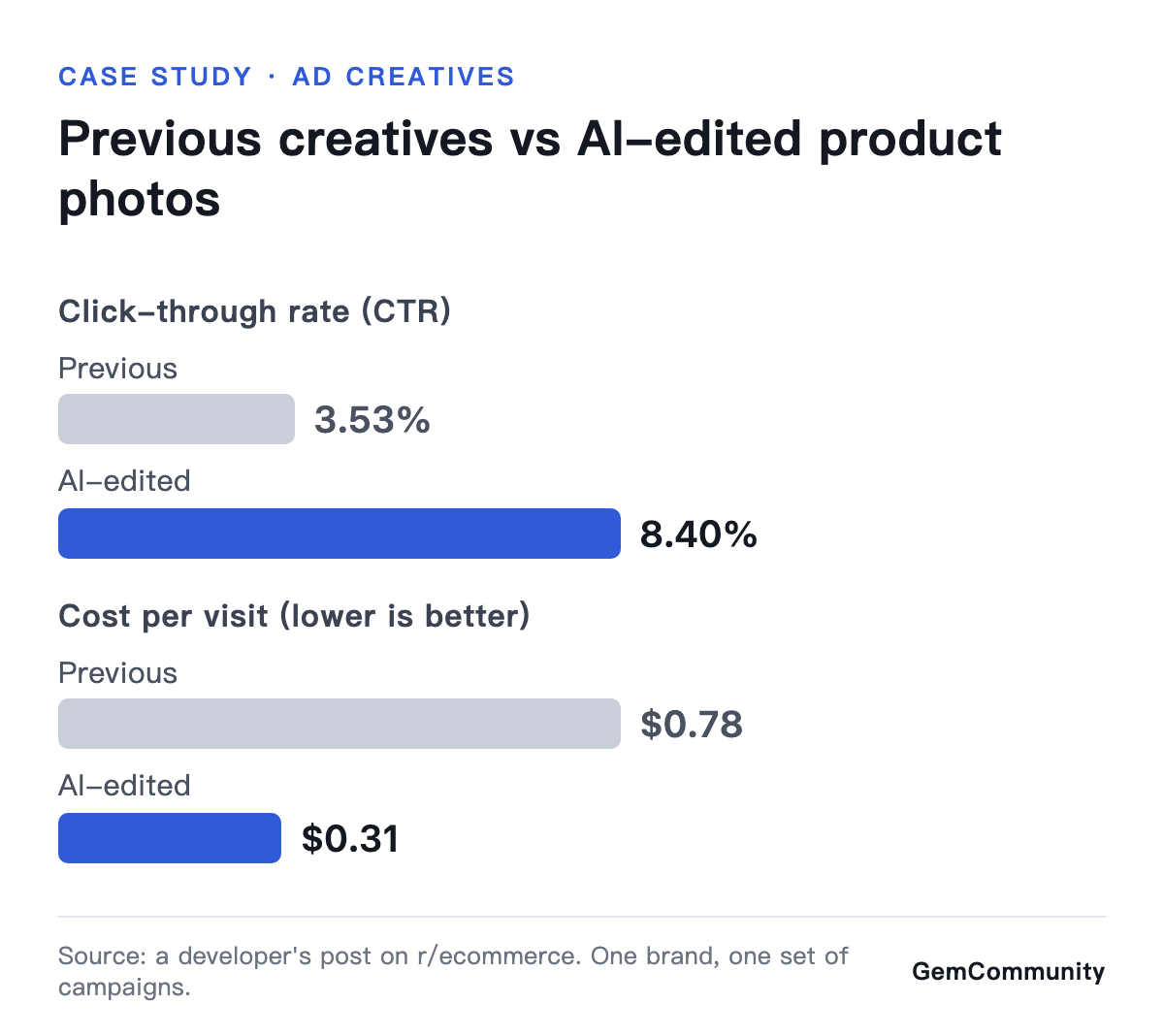
| Metric | Previous creatives | AI-edited creatives |
|---|---|---|
| CTR | 3.53% | 8.40% |
| Cost per visit | $0.78 | $0.31 |
One of the new creatives got about 3 times the clicks of the previous best performer. The developer calls it one brand and one set of campaigns, and warns against drawing a universal conclusion.
The post gives no conversion rate, revenue or ROAS. It shows cheaper clicks and says nothing yet about sales.
How can you test this on your store?
- Pick one collection and make 3 to 5 AI variations of existing product photos, changing only the background, setting and styling.
- Check each image against the physical product: color, size and details must match what you ship.
- Run the variations against your current best creative in the same ad set, with the same budget, for at least a week.
- Judge the result on cost per purchase and ROAS as well as CTR.
- Keep the winners and give each collection its own visual direction.
Frequently asked questions
Do AI product photos hurt trust for expensive products?
In this one test they did not hurt clicks: CTR more than doubled for a high-ticket brand. The post has no data on conversion rate, returns or complaints, so the trust question is still open.
Were the products themselves generated by AI?
According to the post, the team kept the real products and used AI only to change the setting and presentation around them.
Who reported these numbers?
The developer who built the image tool the team used. That makes them an interested party, and the brand's own data is not public.
Sources
- Post on r/ecommerce: I expected AI product photos to hurt CTR. We saw the opposite